


Formula 1 Returns to Istanbul: How to Experience the Turkish Grand Prix Beyond the Circuit
- Kadir Küçükeren

- May 29
- 10 min read

Formula 1 is coming back to Istanbul — and for many racing fans, this is more than just another Grand Prix returning to the calendar. From 2027, the Turkish Grand Prix is set to return to Istanbul Park, a circuit remembered with real affection by drivers and fans alike. It is fast, demanding, technical, and slightly unpredictable — much like Istanbul itself. For visitors planning a race weekend in Turkey, this creates a rare opportunity: to combine one of the world’s most exciting sporting events with one of the world’s most layered historic cities. İstanbul is not a city you simply “add” to a travel itinerary. It has its own weight. Roman, Byzantine, Ottoman, and modern Turkish life all sit on top of each other here, sometimes in the same square, sometimes in the same building, sometimes in the same view across the water. A Formula 1 weekend in İstanbul is therefore not only about engines, grandstands, and lap times. It can also be about domes, cisterns, mosaics, ferry rides, old neighborhoods, and the strange feeling of standing between continents. For first-time visitors, the Turkish Grand Prix can become the perfect reason to discover Istanbul properly.
Istanbul Park Circuit at a Glance
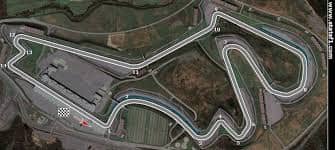
Istanbul Park was designed by renowned circuit architect Hermann Tilke and remains one of Formula 1’s most distinctive modern tracks. The circuit is 5.338 km long, with a full race distance of 309.396 km over 58 laps. It includes 14 turns in total and a 655.5-meter start-finish straight, giving the track a strong mix of high-speed sections, technical corners, and rhythm changes.
The circuit’s most famous feature is Turn 8, often described as one of the most demanding corners in modern Formula 1. Nicknamed “Diabolica” because of its four apexes, Turn 8 became the defining symbol of Istanbul Park. It is long, fast, physically challenging, and one of the main reasons drivers and fans remember the Turkish Grand Prix so clearly.
Istanbul Park covers a facility area of approximately 2,215,000 m², underlining its scale as a purpose-built international racing venue. The official race lap record listed for the circuit is 1:24.770, another reminder of how fast and technical this track can be when Formula 1 cars are pushed to the limit.




Why Istanbul Park Matters
Istanbul Park is one of those circuits that left a strong impression even during its earlier years on the Formula 1 calendar. It is not a temporary street circuit squeezed into a city center. It is a proper racing circuit, located on the Asian side of Istanbul, away from the old town and the Bosphorus, with a layout designed to test both car and driver.
The most famous part of the circuit is, of course, Turn 8. Among Formula 1 followers, Turn 8 has almost become a character of its own. Long, fast, multi-apex, and physically demanding, it is the kind of corner that reminds you why some circuits earn a place in racing memory. It is not just a technical detail for specialists; it shapes how people talk about Istanbul Park.
This matters because Formula 1 fans often travel not only for the race, but for the circuit’s personality. Monza has speed and history. Monaco has glamour and tension. Silverstone has tradition. Istanbul Park has Turn 8, elevation changes, wide corners, and the feeling of a track that rewards bravery without becoming careless. That is why its return feels meaningful.




A Short History of Formula 1 in Istanbul
The Turkish Grand Prix first joined the Formula 1 calendar in 2005, at a time when the sport was expanding into new markets and looking for modern circuits beyond its traditional European homes. Istanbul Park immediately stood out. Designed by Hermann Tilke, the circuit was not simply another new venue with long straights and large grandstands. It had rhythm, elevation change, technical corners, and one section that quickly became famous across the Formula 1 world: Turn 8.
The first Turkish Grand Prix was won by Kimi Räikkönen for McLaren-Mercedes in 2005. That first race gave Istanbul Park a strong beginning, but the circuit soon became closely associated with Felipe Massa. Driving for Ferrari, Massa won three Turkish Grands Prix in a row, in 2006, 2007, and 2008. For many F1 fans, his red Ferrari at Istanbul Park remains one of the defining images of the circuit’s first era.
In 2009, Jenson Button won for Brawn GP during his championship-winning season. In 2010, Lewis Hamilton won for McLaren after a dramatic race remembered partly for the collision between Red Bull teammates Sebastian Vettel and Mark Webber. Then, in 2011, Sebastian Vettel won for Red Bull during his dominant championship campaign.
So, in its original run from 2005 to 2011, Istanbul Park produced winners from some of the most important teams and drivers of the era: McLaren, Ferrari, Brawn GP, and Red Bull; Räikkönen, Massa, Button, Hamilton, and Vettel. It was a short period, but it gave the Turkish Grand Prix a real identity.
Then the race disappeared.
The Turkish Grand Prix was left off the 2012 Formula 1 calendar after the original agreement ended and a new commercial deal could not be reached. Reports at the time also pointed to falling attendance numbers and the circuit’s distance from central Istanbul as part of the problem. In simple terms, Istanbul Park was admired as a racing circuit, but the event itself struggled to remain commercially secure in the Formula 1 calendar of that period.
That is an important distinction. The track was not forgotten because it produced poor racing. Quite the opposite: many drivers and fans continued to respect it. But Formula 1 is not only about the quality of the circuit. It is also about contracts, fees, attendance, logistics, government support, television markets, and the overall value of a Grand Prix weekend.
For nearly a decade, Istanbul Park stayed away from Formula 1. Then came the unusual pandemic seasons.
In 2020, as the global calendar was reshaped by COVID-19 restrictions, Formula 1 needed flexible replacement venues. Istanbul Park returned unexpectedly, hosting its first Grand Prix since 2011. The race became one of the most memorable of the season. The track had been recently resurfaced, temperatures were low, grip was extremely limited, and the weekend became unpredictable from the start. Lance Stroll took his first Formula 1 pole position in qualifying. On race day, Lewis Hamilton delivered a controlled and patient drive in difficult conditions, winning the race and securing his seventh World Drivers’ Championship, equalling Michael Schumacher’s all-time record.
That 2020 race changed the emotional meaning of Istanbul Park. It was no longer only the home of Turn 8 or Felipe Massa’s Ferrari victories. It became the place where Hamilton reached one of the greatest milestones in Formula 1 history. The Turkish Grand Prix returned again in 2021. That year, Valtteri Bottas won for Mercedes, ahead of Max Verstappen and Sergio Pérez. Compared with the dramatic conditions of 2020, the 2021 race felt more controlled, but it confirmed something important: Istanbul Park could still work as a modern Formula 1 venue. The circuit still had character, the drivers still respected it, and fans still remembered it. After 2021, however, the race once again disappeared from the calendar. Formula 1 had entered a period of intense global demand, with many countries competing for limited places on a crowded schedule. Istanbul Park had the track, the history, and the fan interest, but the sport’s commercial calendar had become more competitive than ever.
That is why the 2027 return matters.
Formula 1 has now confirmed that the Turkish Grand Prix will return to Istanbul Park from 2027 as part of a five-year agreement running through the 2031 season. This is not a one-off pandemic replacement or an emergency calendar solution. It is a planned return, supported by a long-term deal.
For Istanbul, this means Formula 1 is coming back not only as a sporting event, but as an international visitor experience. For Formula 1, it brings back a circuit with real racing credibility. And for travelers, it creates a rare opportunity: to build a trip around both the speed of Istanbul Park and the history of one of the world’s great cities.
Year | Winning Driver | Team |
2005 | Kimi Räikkönen | McLaren-Mercedes |
2006 | Felipe Massa | Ferrari |
2007 | Felipe Massa | Ferrari |
2008 | Felipe Massa | Ferrari |
2009 | Jenson Button | Brawn-Mercedes |
2010 | Lewis Hamilton | McLaren-Mercedes |
2011 | Sebastian Vettel | Red Bull Racing-Renault |
2020 | Lewis Hamilton | Mercedes |
2021 | Valtteri Bottas | Mercedes |


Where Is Istanbul Park?
Istanbul Park is located on the Asian side of the city, in the Tuzla/Pendik area, relatively close to Sabiha Gökçen Airport. This is important for planning.
If you imagine Istanbul only through postcards of Hagia Sophia and the Bosphorus, the circuit may feel farther away than expected. The Historic Peninsula, where many first-time visitors stay, is on the European side. Istanbul Park is across the city, and Istanbul traffic can be serious — especially during major events.
That does not make the race difficult to attend, but it does mean planning matters. Visitors should think carefully about where to stay, how to reach the circuit, and how much time to leave for transportation. On race weekend, leaving “just enough time” is rarely a good idea.
For many travelers, the best approach is to separate the trip into two experiences: race days and city days. Keep the Grand Prix days focused and realistic. Then allow one or two extra days to see Istanbul properly, without rushing through major monuments between traffic and starting lights.
For visitors planning to reach Istanbul Park by public transport, one of the most practical options is to use the Marmaray line and get off at Pendik Station. From there, you can continue to the circuit by taxi, which is usually the easiest and most direct choice. Depending on the race weekend arrangements and current city transport schedules, visitors may also continue by Istanbul Municipality buses. Since traffic and event-day routes can change, it is always a good idea to check the latest transport information before leaving for the circuit.


The Best Istanbul Route Around a Formula 1 Weekend
For visitors coming to Istanbul for Formula 1, I would recommend a route that balances the city’s most important historic monuments with one of its most atmospheric viewpoints.
This route can include Hagia Sophia, the Blue Mosque, the Basilica Cistern, Chora Church, and Pierre Loti.
It begins in Sultanahmet, the historic heart of the city. Here, Hagia Sophia and the Blue Mosque face each other across one of the most important urban spaces in the world. This is not simply a “photo stop.” It is a place where imperial ambition, religious history, architecture, and memory all meet. Hagia Sophia carries the story of Byzantine Constantinople, Ottoman Istanbul, and modern Turkey in a single building. The Blue Mosque, with its cascading domes and elegant courtyard, answers that history from the Ottoman side.
A few minutes away, the Basilica Cistern offers a completely different atmosphere. After the light and scale of the great mosques, the cistern takes visitors underground, into a world of columns, water, reflections, and silence. It is one of the best places in Istanbul to feel the engineering intelligence of the Byzantine city. It also gives the day a change of rhythm, which is important in a city as visually intense as Istanbul.
From there, the route can continue toward Chora Mosque, also known to many travelers as the Chora Church or Kariye Museum. Today it functions as a mosque, but its Byzantine mosaics and frescoes remain among the most remarkable artistic treasures in Istanbul. Chora is not always included in quick first-time itineraries, which is exactly why it can feel so rewarding. It gives visitors a deeper view of Byzantine art beyond Hagia Sophia.
Finally, the day can end around Pierre Loti, above the Golden Horn. This is not only a viewpoint; it is a moment to breathe. After the density of Sultanahmet and the emotional detail of Kariye, Pierre Loti offers distance. From there, Istanbul opens up as a landscape: water, hills, mosques, neighborhoods, bridges, and the layered city spreading in every direction.
For a Formula 1 visitor, this kind of itinerary works beautifully. The race gives you speed, sound, and modern energy. This route gives you depth, silence, and historical scale.
During an ordinary trip, visitors may have time to get lost, change plans, and explore slowly. During a Formula 1 weekend, time becomes more valuable. Race sessions, traffic, ticket times, restaurant reservations, and transportation all create pressure.
This is where a licensed private guide can make a real difference.
Practical Tips for Formula 1 Weekend Visitors
First, do not underestimate distances. Istanbul Park is not next to Sultanahmet, Taksim, Galata, or the Bosphorus hotels that many visitors know. Always allow more time than the map suggests, especially on race days.
Second, consider staying according to your priorities. If the race is the main focus, the Asian side or areas closer to Sabiha Gökçen Airport may make logistics easier. If Istanbul itself is just as important as the race, staying in the historic center or around the Bosphorus may offer a richer city experience, but you must plan transportation to the circuit carefully.
Third, add extra days if possible. Arriving late Friday and leaving Monday morning will make the trip feel compressed. A better plan is to arrive a day or two before the race weekend or stay after the Grand Prix. Istanbul rewards time.
Fourth, book key visits carefully. Major monuments such as Hagia Sophia, the Basilica Cistern, and Kariye can involve visitor rules, prayer times, ticket systems, and crowds. These details can change, so check current information before your trip.
Fifth, do not try to see everything. Istanbul is too large and too layered for that. A focused route is better than an overloaded one. Hagia Sophia, the Blue Mosque, the Basilica Cistern, Chora Church, and Pierre Loti already make a powerful day. Add a Bosphorus experience or a good dinner, and the trip becomes complete without becoming exhausting.
Finally, leave room for atmosphere. Istanbul is not only a list of monuments. It is also ferry horns, tea glasses, street cats, call to prayer, traffic, seagulls, old stone, wet pavements, and sudden views of water. The best trips here usually include both planning and surrender.
More Than a Race Weekend
Formula 1’s return to Istanbul is exciting because Istanbul Park deserves its place in the sport. The circuit has character. Turn 8 has legend. The Turkish Grand Prix has memories that still matter.
But for travelers, the real opportunity is larger than the race itself.
A Grand Prix weekend in Istanbul can become a meeting point between speed and history. One day, you are watching the fastest drivers in the world attack one of Formula 1’s most demanding corners. The next, you are standing beneath the dome of Hagia Sophia, walking through the cool darkness of the Basilica Cistern, studying the mosaics of Kariye, or looking down at the Golden Horn from Pierre Loti.
Few Formula 1 destinations can offer that kind of contrast.
That is why the Turkish Grand Prix should not be treated as a quick weekend escape. It is a reason to come to Istanbul — but Istanbul itself may become the part of the journey you remember longest.
Bibliography
Formula 1. “Formula 1 Returns to Turkey’s Istanbul Park from 2027 as Part of New Five-Year Agreement.” Formula1.com.
TOSFED İstanbul Park. “Home Page / Circuit Information.” TOSFED Istanbul Park.
The Guardian. “Turkish Grand Prix Dropped from 2012 Formula One Calendar.” The Guardian, 29 July 2011.
GP Destinations. “Race Facts: Turkish Grand Prix.” GP Destinations.
Comments